Product & Design System Designer

Karthik
Santhanam

Designing systems that are functional, ethical, and human-centred

5+ years of multidisciplinary design experience, with 3+ years focused specifically on complex digital systems - payment infrastructure, merchant platforms, and scalable design systems. I believe design is not what you see. It's how systems behave, what they make possible, and what harm they quietly cause when built without care.
5.5
Years of experience
4+
Complex systems
Design velocity
40%
Faster front-end dev
"Design is not what you see on billboards. It's far beyond how it looks - it's how it functions, and the value it creates or destroys for every living being that touches it."
Karthik Santhanam, on design philosophy
01 - Philosophy

Manifesto

01 - SYSTEMIC HARM

Bad design
at scale kills

Design decisions don't exist in isolation. When information architecture fails, when systems are built without behavioural consequence in mind, the damage compounds silently across millions of people.

India's antibiotic resistance crisis is a design failure. Paracetamol for every symptom, Ciprofloxacin for convenience - unregulated, uncommunicated, undesigned. WHO research shows antibiotics are now significantly less effective on Indian populations. That's what poor medical information design looks like at scale.
Ref: WHO GLASS Report WHO AMR India

02 - ACCESSIBILITY

Contrast ratios
are the floor,
not the ceiling

The industry treats WCAG contrast compliance as the finish line for accessibility. It is the starting point. True accessible design means building systems that work for every body, every ability, every context.

Haptic feedback for users who cannot see. Screen-reader-friendly information hierarchies. Tap target sizes for users with motor impairments. Cognitive load reduction for neurodiverse users. Accessibility is a systems problem, and most teams are only solving one line of it.
03 - ETHICS

Dark patterns
are violence
by design

Designing against the user's interest is not a growth hack. It is a failure of responsibility. Europe's early legislation against dark patterns reflects something deeper - that design shapes society, and designers are accountable for what they build.

In my own work, I have pushed back against stakeholder pressure to embed promotional branding in consumer-facing banking interfaces - not just because it was tactically wrong, but because it erodes the trust that financial systems depend on to function.
02 - Work

Selected Case Studies

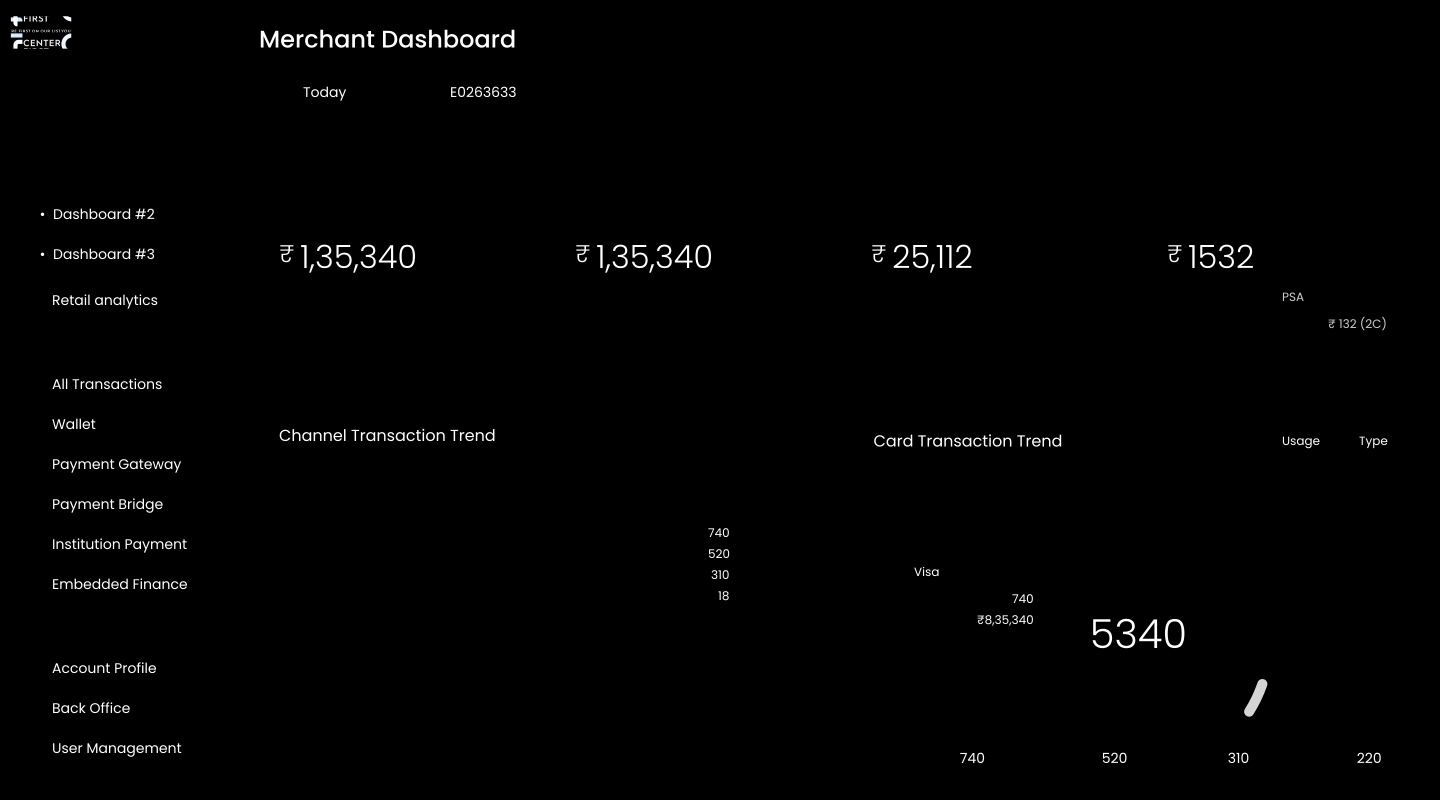
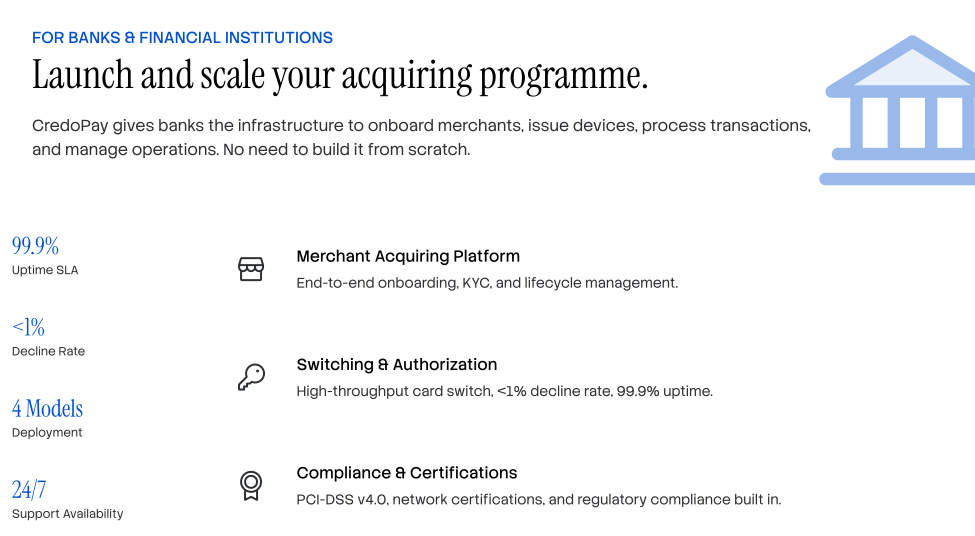
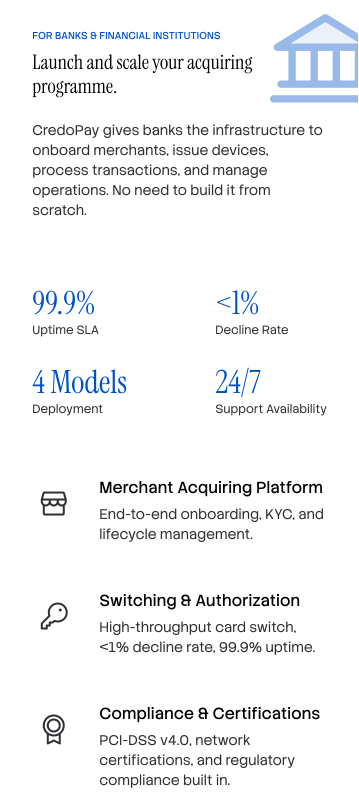
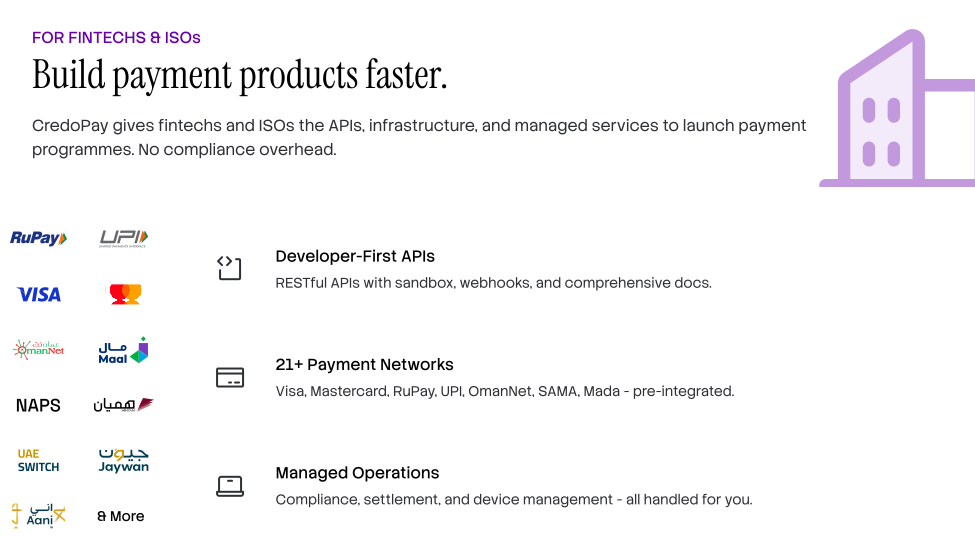
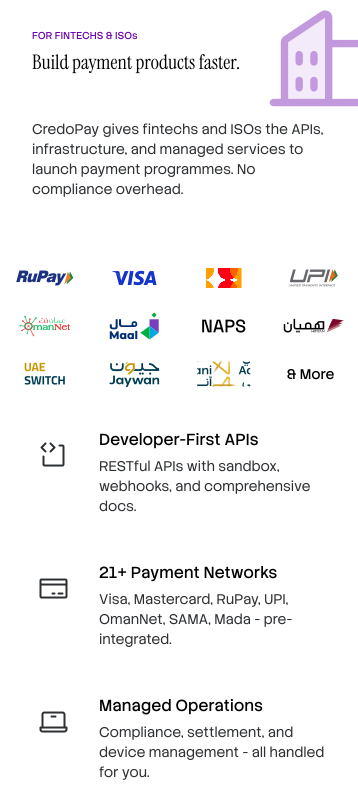
Merchant Acquiring Platform | CredoPay

Redesigning Merchant Onboarding for Conditional Compliance

A complex KYC flow serving multiple merchant types - each with different regulatory requirements - was collapsing under its own weight.

UX Design Systems Thinking Fintech
The Problem

Every merchant - whether a payment gateway customer or a physical POS terminal operator - was forced through the same exhaustive onboarding process. A PG merchant had to upload photographs and complete geofencing steps that are legally irrelevant to their use case.

The result: onboarding took 15-30 minutes per merchant, executives were burning out on repetitive manual guidance, and the system had zero capacity for self-onboarding.

The Insight & Solution

The core insight was structural: different merchant types have fundamentally different compliance needs. Rather than a single linear flow, the system needed conditional logic.

I restructured the onboarding as a branching information architecture. PG customers see a streamlined flow with no photography or geofencing. POS merchants encounter the additional regulatory steps that their use case requires.

Merchant Onboarding Redesign Case Study
30%
Faster onboarding in optimistic cases
10%
Minimum improvement across all merchant types
Self
Onboarding cases observed for the first time
Ethical dimension

During this project, stakeholders pushed to embed brand promotions within the consumer-facing banking interfaces. I opposed this - revealing that a bank's payment infrastructure is managed by a private third party erodes the institutional trust that banking depends on. Promotion is not always design. Sometimes the most responsible design decision is restraint.

Design Systems | CredoPay

A Scalable Design System Across Financial Products

Building the shared visual and interaction language for a payment gateway, merchant SaaS platform, school bill collection portal, and mTLS interfaces.

Design Systems Figma Multi-product
The Challenge

A growing fintech product suite - four distinct platforms, each serving different users - was beginning to fragment visually and behaviourally. Components built for one product were being copy-pasted and modified for another, creating maintenance debt.

The Approach

Built and maintained a scalable design system that served as the single source of truth across all products. The system balanced consistency (shared tokens, components) with flexibility. Led a team of two designers in its implementation and ongoing governance.

Design System Case Study
Faster design cycles in optimistic scenarios
40%
Faster front-end development
99%
Token duplication eliminated across products
03 - OTHER WORK

Further Work

Payment Infrastructure

Payment Gateway

Architected a universal, cross-border checkout interface replacing multiple localised designs. The core structural challenge was standardising drastically different regional payment behaviours - from Indian UPI to Omani Tap-and-Pay to US Wallets. Transitioned the architecture from rigid horizontal tabs to a dynamically adapting, vertically stacked semantic layout (Saved, Express, Single-Click Routing).

Security | Fintech

mTLS Transaction System

Transitioned a third-party mTLS infrastructure into an in-house bespoke system. The primary design challenge wasn't UI, but Service Design: mapping the cryptographic key exchange flows from scratch through intense cross-discipline collaboration between Hardware Manufacturers, MPOS Licensing, and Secure SDK engineering teams.

EdTech | Civic

School Bill Collection Portal

Originally scoped as a universal 'Corporate Payment' platform for varied B2B recurring payments. Recognising severe timeline risks due to infinite business configuration edge-cases, advocated for a strategic scoping pivot to focus Phase 1 strictly as an EdTech portal. This constraint enabled a feasible roadmap - currently in active development - while we solve complex domain-specific logic like annual student promotions.

04 - ABOUT

The Person Behind the Work

I'm a product designer from Tamil Nadu, India, with 5.5 years of experience designing complex digital systems - primarily in fintech. My work sits at the intersection of information architecture, interaction design, and ethical systems thinking.

I'm a Gold Medallist in B.Sc. Visual Communication from Bharathidasan University. My research interests focus on how digital products shape human behaviour - and the responsibility that comes with that.

I'm currently applying to the Master's in Digital Humanities and Digital Knowledge at the University of Bologna - because I want to study these questions rigorously, not just practise them intuitively.

Information Architecture Design Systems Interaction Design Accessibility Ethical Design Human-centred and ethical design Accessibility and inclusive digital systems Impact of digital products on society
  • NOV 2022 - PRESENT
    Product Designer
    CredoPay, India
  • MAR 2022 - NOV 2022
    Graphic Designer
    Poorvika Mobiles, Chennai
  • MAR 2021 - FEB 2022
    Graphic & Video Editor
    Wise Chanakya, Pune
  • SEP 2020 - MAR 2021
    Video Editor & Animator
    FlintoBox, Chennai
  • 2018 - 2021
    B.Sc. Visual Communication - Gold Medallist
    Bharathidasan University
05 - Contact
Let's talk about
design that matters

Available for conversations about ethical design, digital humanities, and the future of human-centred systems.